Build Something You Own
After all this work, what remains yours?
How Africans and the Diaspora Can Turn What They Know Into Assets, Ownership, and Opportunity.
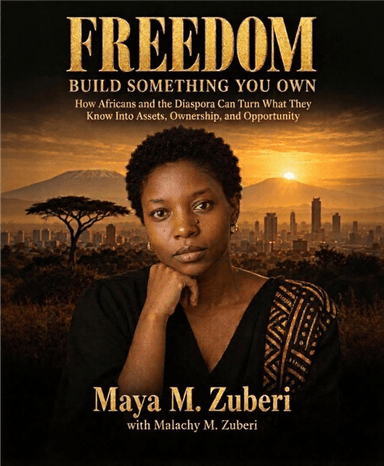
Maya M. Zuberi with Malachy M. Zuberi · Published by Wanzia Books
Watch Maya's story — and why it became the reason FREEDOM exists.
FREEDOM series
Two books. One $4.99 purchase.
Get LifeFund Today. Help Bring FREEDOM: BUILD SOMETHING YOU OWN to Life.
Pre-order price
$4.99
After all this work, what remains yours?
PRE-ORDER FREEDOM: BUILD SOMETHING YOU OWNPre-order FREEDOM: BUILD SOMETHING YOU OWN for $4.99. Get the completed LifeFund digital book and included bonuses immediately. Your reserved digital edition will be added to your library when released, at no additional charge.
Every verified pre-order is counted. Reader demand helps decide which books we produce first, so stronger demand may move FREEDOM: BUILD SOMETHING YOU OWN up the production schedule, subject to research requirements, resources and timing. Earlier publication is not guaranteed.
No release date has been announced. The order and timing of future book releases may change.
Included With Your Pre-order
Available in your membership library immediately after purchase:
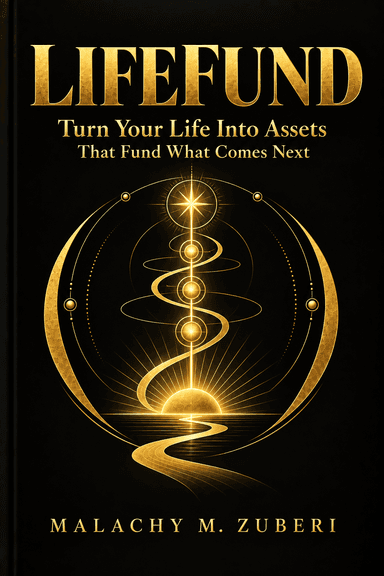
LIFEFUND: Turn Your Life Into Assets That Fund What Comes Next
The completed LifeFund front-end digital book, available immediately after an eligible purchase.
Included with your pre-order. It does not replace FREEDOM: BUILD SOMETHING YOU OWN.
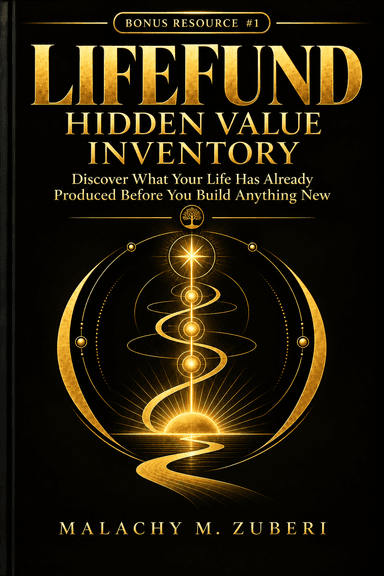
The LifeFund Hidden Value Inventory
Discover what your life has already produced before you build anything new.
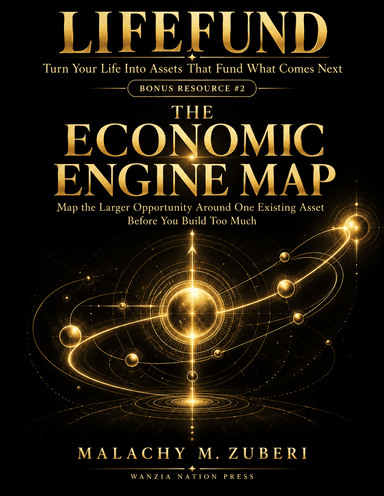
The LifeFund Economic Engine Map
Map the larger opportunity around one existing asset before building too much.
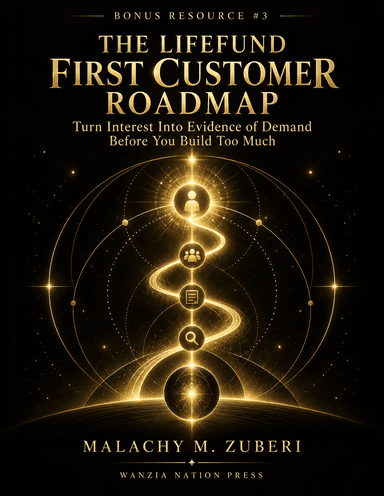
The LifeFund First Customer Roadmap
Turn interest into evidence of demand before building too much.
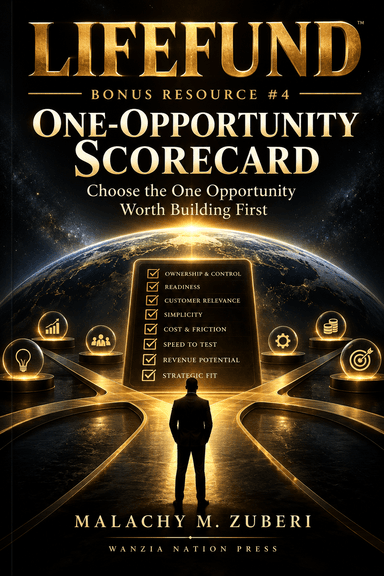
The LifeFund One-Opportunity Scorecard
Choose the one opportunity worth building first.
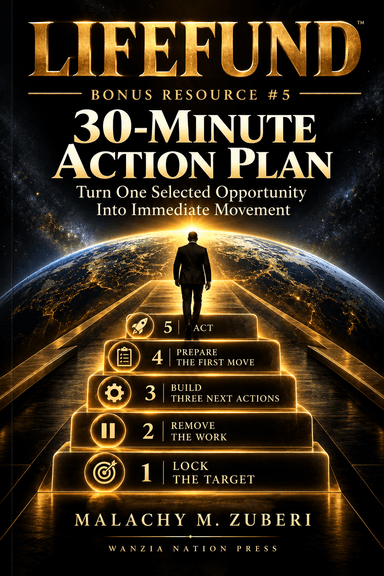
The 30-Minute LifeFund Action Plan
Turn one selected opportunity into immediate movement.
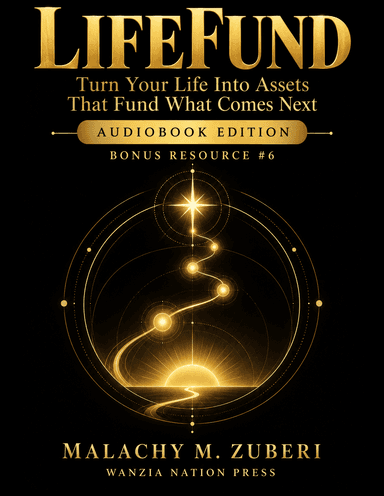
LifeFund Audiobook Edition
Listen to the complete LifeFund book.
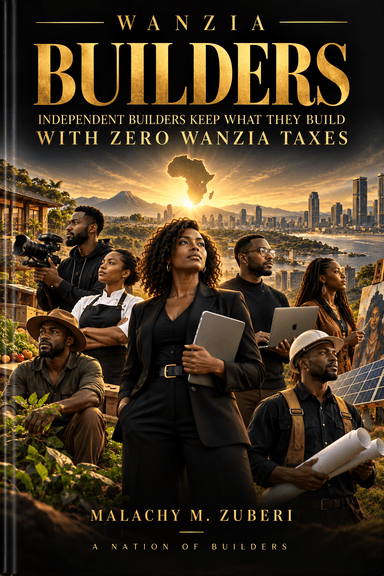
BUILDERS: A Nation of Builders
The companion book that expands the reader from discovering and developing existing value into the larger identity of becoming an independent builder.
A Wanzia companion book for creators, entrepreneurs and builders developing independent economic capacity.
LifeFund Progress Checklist
Track your completed actions and see which steps are still unfinished.
An interactive checklist in your member area.
She Left Kenya Looking For One Thing
Maya left Kenya searching for economic opportunity.
She wanted to earn. She wanted to help her family. She wanted to build something.
She traveled to Saudi Arabia to work inside a household — the kind of opportunity millions of people take every year, for the same reasons.
At first, there was simply a new place, a new system, and hard work to learn.
Then the work became exhausting in a way that felt different.
She decided she wanted to go home.
That was when she discovered how much had quietly changed.
“I'm Not Giving You Anything”
When Maya asked to leave, her employer told her there was a contract, and that leaving required more than simply wanting to.
Then came something Maya had not expected: she was told she owed money for a medical expense.
She had never been to the hospital in question. She had never received the money being described. When she said so, she was shown a bank transfer, and a photograph of a woman in a hospital bed — a woman who was not her.
From that point, leaving was no longer only about wanting to go. There was now a debt attached to her that she did not recognize, and no clear way to dispute it from inside another country.
Then she asked for her passport and identification, so she could travel home.
“I'm not giving you anything,” her employer told her.
The documents had been held since she arrived — ordinary, she had assumed, until the moment she actually needed them back. She was told that even a purchased ticket would not be enough. The passport carried her name. It was not in her hands.
Her pay began changing too — reduced for “food and accommodation,” in the same house she was still working in, specifically because she had said she wanted to leave.
For months, every question was met with the same answer: tomorrow. Tomorrow there would be an explanation. Tomorrow came, and there wasn't one.
One by one, the paths she expected to lead somewhere — the agent, the office, her employer's own promise to help — closed. What was left was a harder question than the one she started with: not which option should I choose, but do I still have one.
Eventually, quietly, and with help, Maya got out.
She made it home to Kenya.
Wanting to leave and being free to leave are not the same thing.
Coming Home Wasn't The Same As Being Free
She was safe. She was back in her own country. That mattered.
But the problem that had sent her looking for opportunity in the first place had not disappeared. She still needed income. She still had responsibilities. She still wanted a better life for her family.
Survival had gotten her out of one situation. It had not built the next one. And when the same economic pressure remained, Maya made a decision that says more about the real problem than any single chapter of her story: she went back to the Gulf again.
Not because the first experience had been forgotten. Because coming home hadn't created capital, income, or an asset — only relief.
Rescue is not the same as freedom.
Getting your options back is one form of freedom.
Creating new options is another.
This Is Not Only Maya's Story
Maya's circumstances reached an extreme.
Most readers of this page will never have a passport withheld. This book does not equate an ordinary job with what she lived through — the degree is not the same.
But strip away the extremity, and one question underneath it is recognizable almost everywhere:
How much of your economic life depends on something someone else controls?
Think about:
This is fundamentally a human problem.
FREEDOM has particular relevance to Africans and the diaspora — communities that have often crossed borders, systems, and economies not built with them in mind. But the economic principle underneath it applies far more broadly than that.
Maya's experience reached an extreme. The question underneath it is everywhere.
After all this work, what remains yours?
The Equation Most Of Us Were Handed
Most of us are taught a simple equation: time, then work, then pay.
You can follow that equation faithfully for years — and still ask, at the end of it, a much harder question:
After I do all this work, what remains mine?
Not just this week. Not just this paycheck. After a year. After five years. After ten.
Savings? Skills? Customers? Intellectual property? A business? An asset that keeps producing value after the labor ends?
Or only the need to work again tomorrow?
THE OLD EQUATION
WHAT FREEDOM BUILDS INSTEAD
Your Life May Already Be Producing Raw Material
Most of us are taught to look outside ourselves for opportunity.
But some of the raw material for your next opportunity may already exist — in what you've experienced, what you've survived, what you've figured out, what people already ask you about.
Experience. Knowledge. Skills. Solutions. Methods. Discoveries. Relationships. Perspective. Stories. Expertise.
Most of it has never been organized, given a form, or put in front of anyone who might value it. That's not because it lacks value. It's because nobody ever stopped to look.
How Knowledge Becomes An Asset — And What An Asset Can Become
This is the mechanism underneath FREEDOM. Not a promise. An architecture.
Lived experience becomes useful knowledge once you recognize it as more than something that simply happened to you.
Useful knowledge, organized and given a form, becomes intellectual property.
Intellectual property you control becomes an owned asset.
An owned asset, put in front of the right people, can create a customer.
A customer reveals a next need — evidence of what they want after the first purchase.
That next need can become additional products, which create revenue.
Revenue can be reinvested.
And then the question becomes: what comes next?
Another asset. A product line. Education. Media. Licensing. Software. Services. A new business. Property. A family project. Another book. A larger existing business. Something you cannot yet see.
This is opportunity architecture, not an earnings promise. Not every asset works. Not every product sells. But this is the shape of what becomes possible when knowledge stops disappearing.
The First Asset Is Not The Ceiling. It's The Front Door.
ONE PIECE OF KNOWLEDGE CAN BECOME AN ASSET.
ONE ASSET CAN CREATE A CUSTOMER.
ONE CUSTOMER CAN REVEAL A MARKET.
And a market can become something far bigger than the first product that opened the door.
Not every reader will follow this exact sequence. It is illustrative of potential, not a guarantee.
But a book has opened doors like this before:
$4.99 is the price of the book.
It is not the size of the idea.
Maya: The Sunrise Case Study
Most case studies begin after something has worked. This one begins before anyone knows the ending.
Maya has been recording her story, mostly with a phone. She speaks. Malachy asks questions. She remembers. Those recorded conversations preserve knowledge that once existed only in memory.
The recordings became content. The content became organized knowledge. The knowledge became intellectual property. The intellectual property became this book — an owned asset, with potential customers, and next products or opportunities still ahead of it.
Maya is not being presented as someone who has already finished this journey. She is building the economic engine while you read.
Sunrise is not victory. It is not the finished day. It is simply the point when enough light appears to see possibilities that were invisible before.
Before You Decide
Not every asset works. Not every product sells. Not every story should be public. Privacy and consent matter. The market — not this page — ultimately decides what has economic value.
What FREEDOM Teaches You To Do
The book moves from Maya's story into a practical method:
SEE
Recognize the value already there: the experience, knowledge, skill, method, discovery or story you've stopped noticing because you lived it.
BUILD
Turn that knowledge into your first owned asset, in the smallest credible form capable of carrying it.
OWN
Move from knowledge to intellectual property, an audience, and real economic options
MULTIPLY
Understand how helping someone else can create more value than it consumes, instead of only costing you time or money.
CHOOSE
Decide whether to build it yourself, build it with help, or build the infrastructure around it
The method is in the book. You will not need to buy something else just to find the missing steps.
Additional tools can make it easier, faster, or more professional. The method itself is already here.
Your LifeFund Bonuses
Included with your pre-order and available immediately: the completed LIFEFUND digital book and the LifeFund bonuses, built directly from the same system.
LIFEFUND: Turn Your Life Into Assets That Fund What Comes Next
The completed LifeFund front-end digital book, available immediately after an eligible purchase.
Included with your pre-order. It does not replace FREEDOM: BUILD SOMETHING YOU OWN.
The LifeFund Hidden Value Inventory
Discover what your life has already produced before you build anything new.
The LifeFund Economic Engine Map
Map the larger opportunity around one existing asset before building too much.
The LifeFund First Customer Roadmap
Turn interest into evidence of demand before building too much.
The LifeFund One-Opportunity Scorecard
Choose the one opportunity worth building first.
The 30-Minute LifeFund Action Plan
Turn one selected opportunity into immediate movement.
LifeFund Audiobook Edition
Listen to the complete LifeFund book.
BUILDERS: A Nation of Builders
The companion book that expands the reader from discovering and developing existing value into the larger identity of becoming an independent builder.
A Wanzia companion book for creators, entrepreneurs and builders developing independent economic capacity.
LifeFund Progress Checklist
Track your completed actions and see which steps are still unfinished.
An interactive checklist in your member area.
Powered By LifeFund
FREEDOM is a branded expression of LifeFund, applied specifically to ownership and economic options.
LifeFund's premise: life already produces raw material — experience, knowledge, skills, solutions, methods, discoveries, relationships, perspective, stories, expertise. The system helps you identify what's useful, give it the right form, put it in front of people who care, create customers, and use confirmed demand to help decide what comes next.
REAL -> REFRAME -> REVEAL -> PACKAGE -> DISTRIBUTE -> FUND
The Event Ends. The Asset Continues.™
LifeFund is the system underneath this book — learn how it works.
Who This Book Is For
This book is for you if:
You've worked hard for years and have very little to show for it beyond this month's bills.
You have real expertise that has never left the job, the household, or your own head.
You depend on one employer, one platform, one client, or one marketplace for your entire income.
You send money home to solve the same problem, over and over, with no end in sight.
You've lived through something difficult and never once considered that it might contain value.
You're an African or diaspora reader who has watched knowledge, skill, and story go unrecognized as the assets they are.
Before You Decide
“I don't have an audience.”
You don't need one first. FREEDOM doesn't start with followers — it starts with a customer. One person who needed what you already know is enough to begin.
“I don't want to be an influencer.”
Good — this isn't that. FREEDOM isn't about documenting your life for an algorithm. It's about recognizing value you already have and putting the right part of it in front of people who care.
“I don't know what product to create.”
You're not expected to know yet. The FREEDOM Value Finder and the First Asset Blueprint exist specifically to help you find and shape it — you start with an experience, not a finished idea.
“I have a job.”
Most people who do this start beside a job, not instead of one. The Freedom Ownership Audit takes a page, not a leap — you're not being asked to quit anything.
“I don't have much money.”
The entry point is $4.99. That's deliberate. This is designed to be a low-friction way in, not a barrier.
“I'm not a business person.”
This isn't a business degree. It's a method for recognizing what you already know and giving it a form other people can use. The method is written for the person who has never done this before.
“My story is private.”
It should stay that way if you decide it should. Not every experience deserves to become public, and FREEDOM never asks you to sell your privacy. You decide what happens to what you know.
“I'm helping someone else rather than myself.”
That's exactly how FREEDOM itself began — one person trying to help another, and discovering that helping could create more value than it consumed. Profit with someone, not from them, is the whole premise.
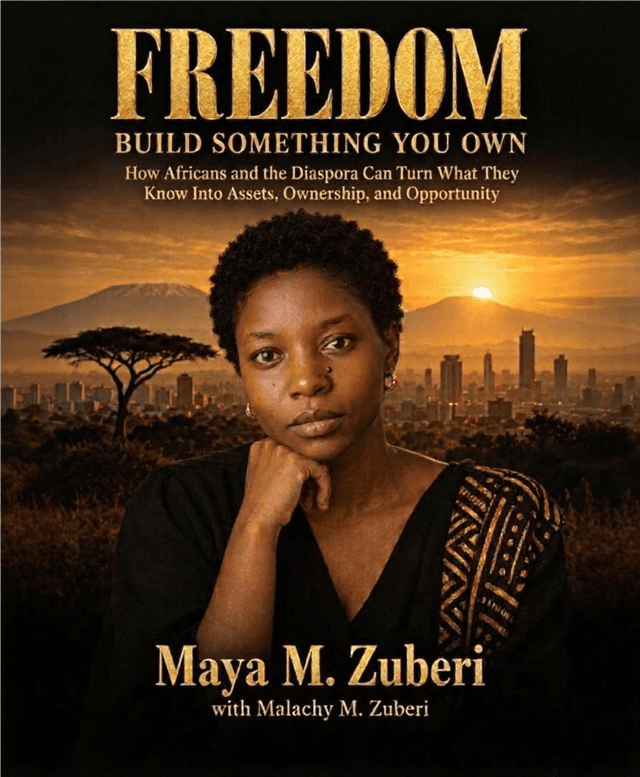
Pre-order FREEDOM: BUILD SOMETHING YOU OWN
FREEDOM: BUILD SOMETHING YOU OWN: How Africans and the Diaspora Can Turn What They Know Into Assets, Ownership, and Opportunity. By Maya M. Zuberi with Malachy M. Zuberi, FREEDOM series.
Early-release digital offer. LIFEFUND and the LifeFund bonuses immediately; this book when released.
Cancellation And Refunds
Your $4.99 early-release purchase provides immediate access to the completed LifeFund digital book and included bonuses, plus a reservation for your selected forthcoming title. No release date has been announced for the forthcoming title. You may cancel your reservation and request a full $4.99 refund at any time before that title is released. Contact our support team using the email address associated with your purchase. Approved refunds will be returned to the original payment method. Your future-title reservation will be cancelled, but you may keep the LifeFund book and bonuses already delivered. If the forthcoming title is cancelled permanently, outstanding reservations will be eligible for a full refund. Refunds and order help: email support@wanzia.org from the address you used to buy, or reply to the Stripe payment receipt emailed to you after purchase. Sign-in help: use "Activate account" or "Forgot PIN" at freedom.wanzia.org.
Pre-order price
$4.99
After all this work, what remains yours?
PRE-ORDER FREEDOM: BUILD SOMETHING YOU OWN$4.99 Is The Price Of The Book. It Is Not The Size Of The Idea.
A book can become owned intellectual property, a customer-acquisition engine, and the front door to products, services, or a business you haven't built yet.
You don't need ten ideas. You need one experience, revealed as an asset, and put in front of the right people.
After all this work, what remains yours?
Maya asked that question inside a house she could not simply walk out of. Most readers will ask it somewhere far less extreme — a job, a platform, a business that depends on one channel. The question is the same either way.
Build Something You Own.
FREEDOM: BUILD SOMETHING YOU OWN
Maya M. Zuberi with Malachy M. Zuberi
Pre-order price
$4.99
After all this work, what remains yours?
PRE-ORDER FREEDOM: BUILD SOMETHING YOU OWN