What If Your Life Could Pay For Itself?
Your problems, expenses, experiences and expertise may already contain the raw material for assets that can attract customers, create revenue and help fund what comes next.
Without becoming a social media influencer. Without turning your private life into content. And without needing an audience before you begin.
Watch how LifeFund began—and why your own life may already contain assets.
What If Your Life Is Already Producing More Than You Realize?
Most of us are taught to think about money in a fairly simple way.
We work.
We earn.
We spend.
Something breaks, we pay to fix it.
Something difficult happens, we get through it.
We learn something valuable, solve a problem, make a mistake, discover a better way—and then move on with our lives.
But what if that's where we're leaving value behind?
An expense may also produce knowledge.
A problem may force you to discover a solution.
A difficult experience may reveal a pattern.
A decision may create a process someone else could use.
Years of work may produce expertise you've never separated from the job itself.
And a lifetime may accumulate stories, discoveries, relationships and intellectual property that nobody—including you—has ever learned to recognize as assets.
LifeFund is designed to change that.
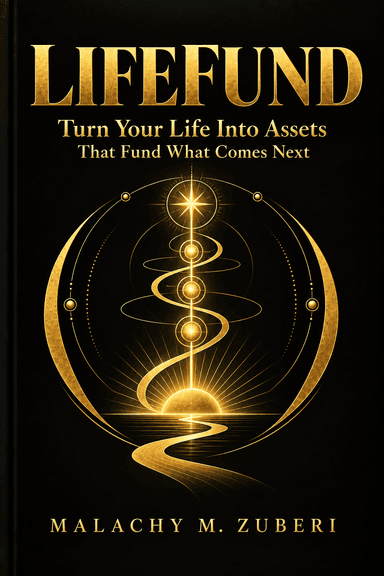
You Don't Need To Become An Influencer. You Need Something Valuable To Sell.
LifeFund isn't about documenting your breakfast, broadcasting your relationships or spending every day feeding a social media algorithm.
It's about recognizing useful value your life has already produced, turning the right part of it into something you own, and putting it in front of people who have a reason to care.
For many people, one of the strongest ways to do that is surprisingly simple:
Write a short book.
Advertise it directly to the people it's designed to help.
Offer additional products that help those customers go further.
Those additional sales are designed to help cover the cost of the advertising that brought those customers in.
Then some of those customers may want something more.
BOOK -> PAID ADVERTISING -> CUSTOMERS -> ADDITIONAL PRODUCTS -> HIGHER-VALUE OFFERS
YOU DON'T NEED FOLLOWERS FIRST.
YOU CAN START WITH CUSTOMERS.
And if you already own a business, this becomes even more interesting.
The book doesn't have to be your business.
IT CAN BE THE FRONT DOOR TO THE BUSINESS YOU ALREADY HAVE.
Your experience and expertise can become intellectual property that introduces strangers to what you know.
Instead of asking them to immediately buy your most expensive product or service, they can begin with something inexpensive and useful.
They become a customer.
They experience your thinking.
And some discover that they want the larger solution you already provide.
EXPERTISE -> BOOK -> CUSTOMER -> ADDITIONAL PRODUCTS -> CORE BUSINESS
And if you don't already have a business?
The same first asset can become the front door to one you haven't built yet.
What If An Expense Could Produce More Than A Bill?
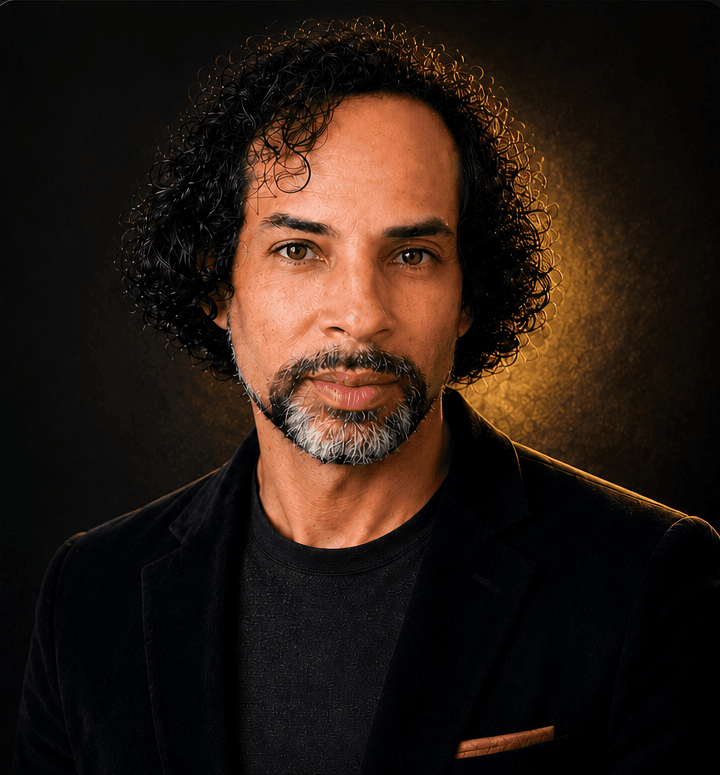
I'm Malachy M. Zuberi, author of LIFEFUND.
The idea behind this book didn't begin as a business theory.
It began with something much more ordinary.
My HVAC system failed.
Replacing it was going to cost me more than $13,000.
There was nothing particularly inspiring about that.
Something broke. It needed to be replaced. I had to make decisions, spend money and deal with the disruption.
But somewhere in that process, I asked myself a different question:
"What if an experience that costs me money can also produce an asset?"
That question changed the way I looked at the experience.
Because the HVAC replacement wasn't producing only an expense.
It was producing research.
Decisions.
Questions.
Comparisons.
Mistakes I could avoid next time.
Information I hadn't known before.
A sequence of actions.
A story.
And potentially something useful to someone who would eventually face the same problem.
The money was still spent.
The HVAC system still had to be replaced.
But the experience didn't have to disappear when the problem ended.
That question became LifeFund.
The Event Ends. The Asset Continues.™
An event happens.
Usually, we experience it and move on.
LifeFund asks you to stop before all of the value disappears with it.
What did this experience cause you to learn?
What did you have to figure out?
What decision did you make?
What mistake did you survive?
What resource did you discover?
What pattern became visible?
What story now exists because you lived through it?
That is the raw material.
The next question is:
What Could It Become?
A book.
A guide.
A checklist.
A course.
A tool.
A video.
A documentary.
A database.
A service.
Software.
A product or system that hasn't been invented yet.
LifeFund isn't about turning every private moment into content.
It's about learning to recognize when life has produced something valuable—and deciding intentionally whether that value deserves to become an asset.
The LifeFund Method
REAL -> REFRAME -> REVEAL -> PACKAGE -> DISTRIBUTE -> FUND
REAL — Start with something real. Something that happened. Something you're experiencing now. Something you've learned, built, solved, survived, discovered or spent money figuring out.
REFRAME — Look at it differently. The question isn't whether the experience was good or bad. The question is: What else did this produce?
REVEAL — Extract the value hiding inside the experience. Knowledge. Decisions. Mistakes. Resources. Emotion. Patterns. Story.
PACKAGE — Give the useful part a form. Not necessarily the biggest form. The smallest credible asset capable of carrying the value well.
DISTRIBUTE — Put it in front of people for whom that value matters. Attention alone isn't the objective. Response gives you evidence.
FUND — Turn confirmed value into economic activity—and use what it produces to help fund what comes next.
That's LifeFund.
You Don't Have To Know What The Asset Is Yet
Start with the experience.
Reveal the value.
Then decide what it should become.
REAL EXPERIENCE -> HIDDEN VALUE -> OWNED ASSET -> CUSTOMER -> REVENUE -> WHAT COMES NEXT
The mistake is deciding on the container too early.
Not everything should become a book.
Not everything should become a course.
Not everything should become public.
And not everything valuable should be monetized at all.
VALUE BEFORE FORMAT.
But when you discover something that should be developed economically, the possibilities become much larger.
For Many People, One Of The Strongest First Assets Is A Book
LifeFund can take many forms, but not every form serves the same purpose.
A profile, article or video can reveal interest and create opportunity.
But when the objective is to create something you own and build a repeatable economic engine around it, a short book surrounded by a product system offers a particularly powerful starting point.
A book can become:
Owned intellectual property.
Something you can sell.
A low-friction way for a stranger to become a customer.
A foundation for additional products.
A source for videos, articles, interviews and other media.
A way to establish an idea before building something larger.
And the beginning of a customer-acquisition engine you control.
The book isn't necessarily the business.
THE BOOK CAN BE THE FRONT DOOR.
What If Your Advertising Could Help Pay For Itself Too?
This is where the economics become especially interesting.
A short book can be offered at an accessible price.
Paid advertising puts it directly in front of the people it's designed to help.
Some people buy only the book.
Others add tools, guides or other products that help them get a better result.
Those additional purchases increase the revenue produced by each new customer.
And the front-end offers are designed to cover the advertising expense required to acquire those customers.
PAID TRAFFIC -> BOOK -> ADDITIONAL PRODUCTS -> CUSTOMER
When those economics work, something important changes.
Instead of spending money simply to attract attention and hoping those people eventually buy something, you're using advertising to acquire customers.
And the revenue those customers generate can pay for the advertising that brings in the next customers.
That's what makes the model scalable.
For someone who already owns a business:
BOOK -> CUSTOMER -> CORE OFFER -> EXISTING BUSINESS
For someone creating something new:
BOOK -> CUSTOMER -> NEW PRODUCTS -> NEW BUSINESS
For someone trying to finance a larger objective:
BOOK -> CUSTOMER -> ECONOMIC ENGINE -> REVENUE -> WHAT COMES NEXT
One underlying economic architecture. Different destinations.
The Asset Isn't The End. It's The Beginning.
A paying customer tells you something important:
Someone valued what you created enough to exchange money for it.
That customer can reveal demand for additional products, services, tools, education, memberships, licensing, partnerships or entirely new businesses.
So the question becomes bigger than:
"How do I make money from this one asset?"
It becomes:
"What can I build around the value I've discovered?"
EXPERIENCE -> ASSET -> CUSTOMER -> ECONOMIC ENGINE -> REVENUE -> REINVEST -> WHAT COMES NEXT
And what comes next is yours to decide.
A film.
Another book.
A business.
Education.
A move.
A property.
A creative project.
Something for your family.
Another asset.
Or something you haven't imagined yet.
LIFEFUND Itself Is An Example
Think about what you're looking at.
An HVAC system failed.
That created an expense.
The expense created a question.
The question revealed a principle.
The principle became a method.
The method became intellectual property.
And that intellectual property became the book you're looking at right now.
EXPENSE -> EXPERIENCE -> INSIGHT -> METHOD -> BOOK -> IP -> ECONOMIC ENGINE
The HVAC repair didn't magically pay for itself.
That's not the point.
The point is that something I once would have treated only as an expense produced additional value because I learned to recognize what else was happening.
The event ended.
THE ASSET CONTINUED.
And once you understand that principle, the question isn't limited to an HVAC system.
It becomes:
WHAT HAS YOUR LIFE ALREADY PAID TO TEACH YOU?
A problem you solved.
A career you've spent years learning.
A move to another country.
A business that succeeded.
A business that failed.
A family story nobody wrote down.
A skill people keep asking you about.
A difficult decision.
A system you created because nothing else worked.
A journey you're still in the middle of.
Something you paid thousands of dollars to learn the hard way.
You don't need ten ideas.
You don't even need to know what the final product should be.
Start with one experience.
Find the value.
Build one asset.
Put it in front of the right people.
See what the market tells you.
ONE EXPERIENCE -> ONE ASSET -> ONE TEST.
LifeFund Is Not About Selling Your Privacy
Some experiences should remain private.
Some stories belong to other people too.
Some knowledge carries cultural, professional or ethical boundaries.
Some pain needs time before anyone should even consider what it might become.
And some things simply shouldn't be monetized.
LifeFund does not require you to turn your life into a public performance.
It teaches you to recognize value.
You decide what happens to it.
Privacy matters.
Consent matters.
Ownership matters.
Dignity matters.
The goal isn't to sell your life.
THE GOAL IS TO STOP AUTOMATICALLY THROWING AWAY EVERYTHING VALUABLE YOUR LIFE PRODUCES.
You Don't Have To Already Know How
You don't need to already be an author.
You don't need a large following.
You don't need to call yourself an entrepreneur.
You don't need to become an influencer.
And you don't need to have the entire business figured out before you begin.
LifeFund separates the process into decisions you can actually make:
What happened?
What did it produce?
Where is the value?
What should that value become?
Who might care?
How do I put it in front of them?
What does the response tell me to do next?
That's enough to begin.
Before You Decide
The expenses. The problems. The unusual experiences. The expertise you've accumulated. The things people ask you about. The mistakes you wouldn't make again. The systems you've figured out. The places you've been. The people you've met. The stories only you can tell. The things you've built. The things you've survived.
What has your life already caused you to create, capture, learn, discover or own that you're currently treating as nothing more than part of living?
You don't have to answer it perfectly. Just have one in mind.
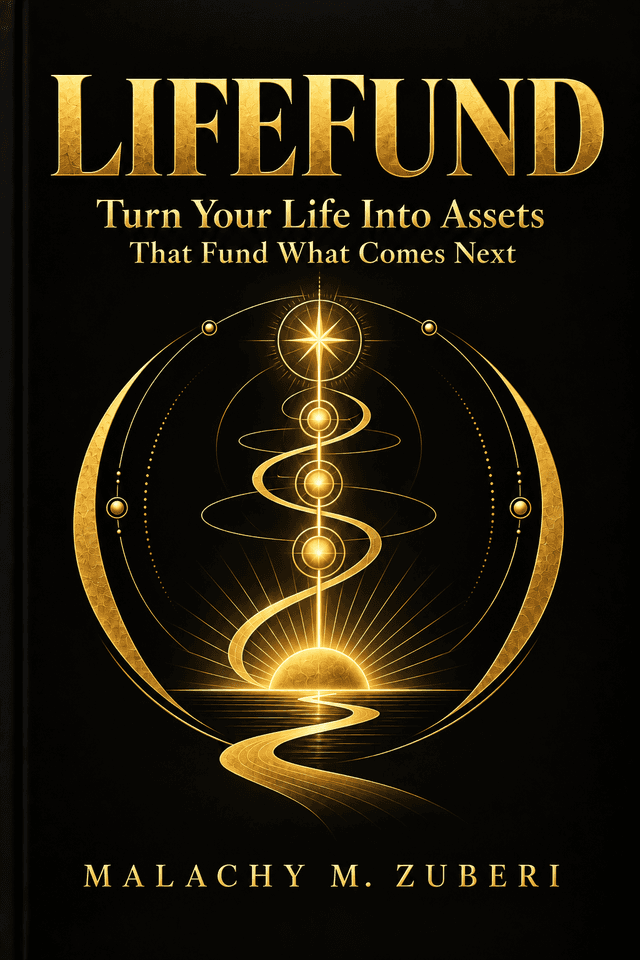
LIFEFUND: Turn Your Life Into Assets That Fund What Comes Next teaches the recognition-and-development method this page has been describing.
And the book itself is an example of that method.
A real expense became a question.
The question became a framework.
The framework became intellectual property.
And now that intellectual property can be put to work.
Read it to understand the method.
Then read it again while asking a different question:
"What is happening in my own life right now that I've never thought to look at this way?"
Find one.
Reveal what's inside it.
Build what deserves to exist.
Put it to work.
$4.99
GET LIFEFUND FOR $4.99365-Day LifeFund Guarantee
Read the book. Put the method to work.
If you don't come away recognizing value in your own life differently - and with a clearer understanding of what you can do with it - contact us within 365 days and we'll refund your $4.99.
Digital Edition — Immediate Access
$4.99
GET LIFEFUND FOR $4.99Immediate Digital Access • 365-Day Guarantee
GET LIFEFUND — PLUS 8 BONUSES
Start with the book—then use the included LifeFund tools to identify what your life is already producing, reveal the value inside it, choose what deserves to become an asset, and begin putting that asset to work.
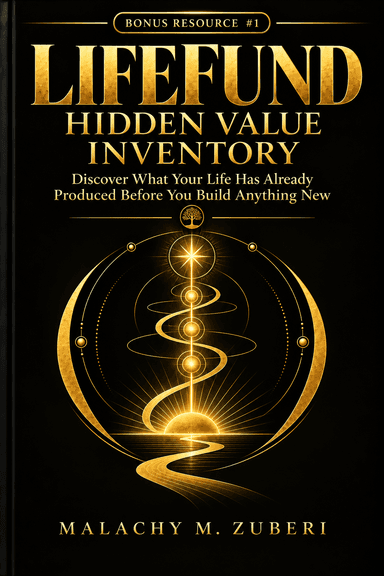
The LifeFund Hidden Value Inventory
Discover what your life has already produced before you build anything new.
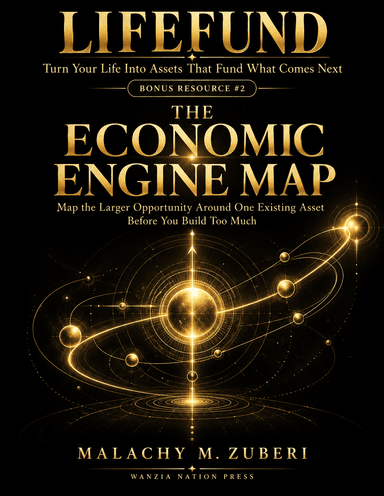
The LifeFund Economic Engine Map
Map the larger opportunity around one existing asset before building too much.
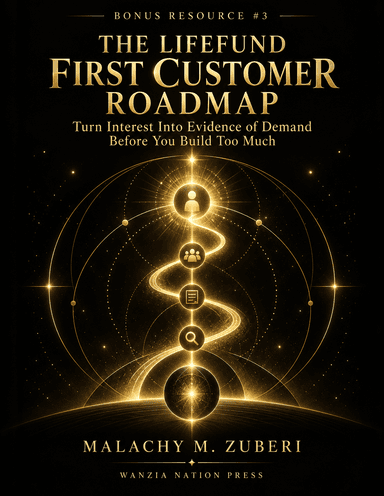
The LifeFund First Customer Roadmap
Turn interest into evidence of demand before building too much.
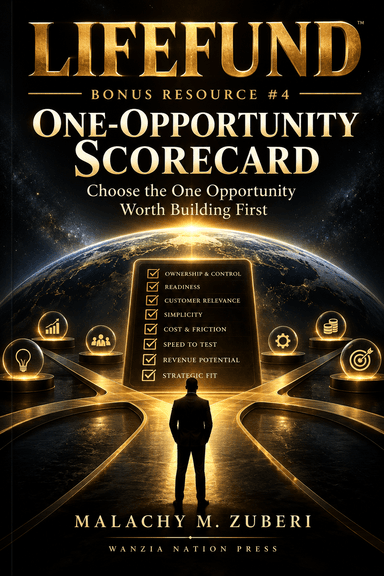
The LifeFund One-Opportunity Scorecard
Choose the one opportunity worth building first.
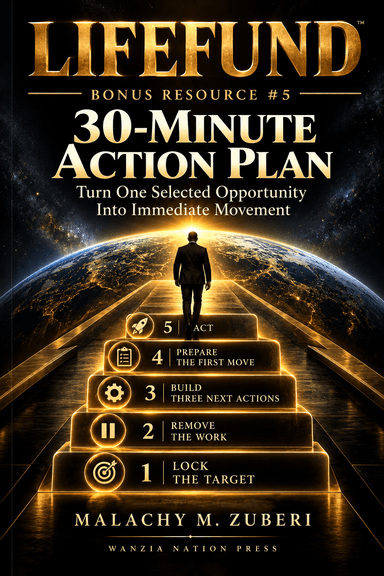
The 30-Minute LifeFund Action Plan
Turn one selected opportunity into immediate movement.
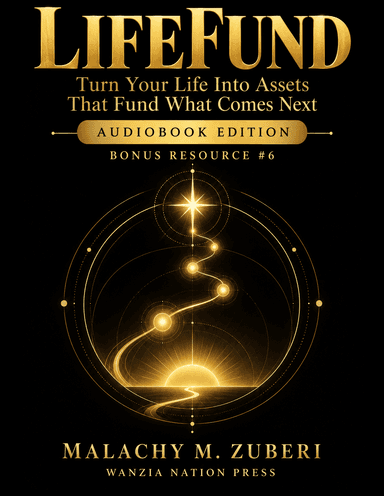
LifeFund Audiobook Edition
Listen to the complete LifeFund book.

BUILDERS: A Nation of Builders
The companion book that expands the reader from discovering and developing existing value into the larger identity of becoming an independent builder.
A Wanzia companion book for creators, entrepreneurs and builders developing independent economic capacity.
LifeFund Progress Checklist
Track your completed actions and see which steps are still unfinished.
An interactive checklist in your member area.